

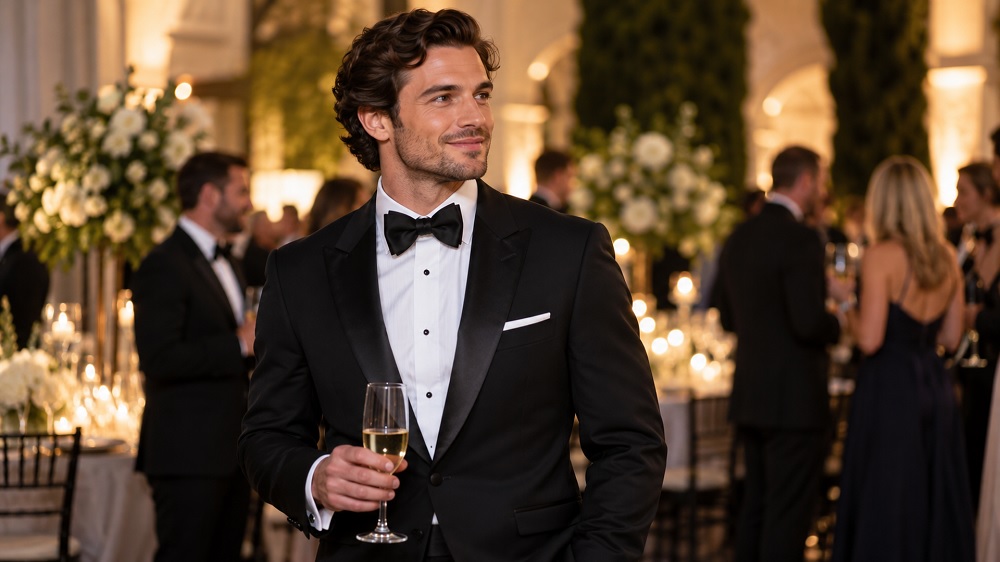
An invitation marked black tie creates a more specific brief than simply looking smart. Before ordering a tuxedo in Bangkok, establish what the host expects, which pieces you already own and how much time you have for fittings. Resolving those questions early makes it easier to choose an outfit that works together and is ready before the event.
Read the Invitation Before Choosing a Design
Black tie traditionally calls for evening dress built around a dinner jacket, matching formal trousers and a bow tie. It is a different starting point from an ordinary business suit. The invitation may allow variations, but a photograph of a celebrity at an awards ceremony does not necessarily show what will be appropriate at your event.
Ask the organiser if the wording is unclear, particularly for a themed celebration, destination wedding or event combining cultural traditions. “Formal” may be interpreted differently by different hosts. Confirming the expectation before ordering is much easier than trying to adapt a finished outfit shortly before departure.
Plan the Shirt and Accessories as Part of the Outfit
Consider the shirt, bow tie and shoes while choosing the jacket and trousers. The collar needs to work with the tie, the cuffs need appropriate fastenings and the shirt front should suit the intended level of formality. Buying these separately at the last minute can leave you with pieces that are individually smart but awkward together.
Ask which accessories are included in the quoted price. Cufflinks, shirt studs where required, braces and footwear can add to the total, even when the jacket and trousers appear to fit the budget. Identify what you can reuse and what still needs to be bought before deciding how much to spend on decorative details.
For someone attending only one event, hiring or adapting suitable pieces already owned may deserve consideration alongside commissioning a new outfit. Regular use can make ownership more practical, but that depends on future occasions and personal preference. Choose on that basis rather than assuming custom clothing is automatically the best value.
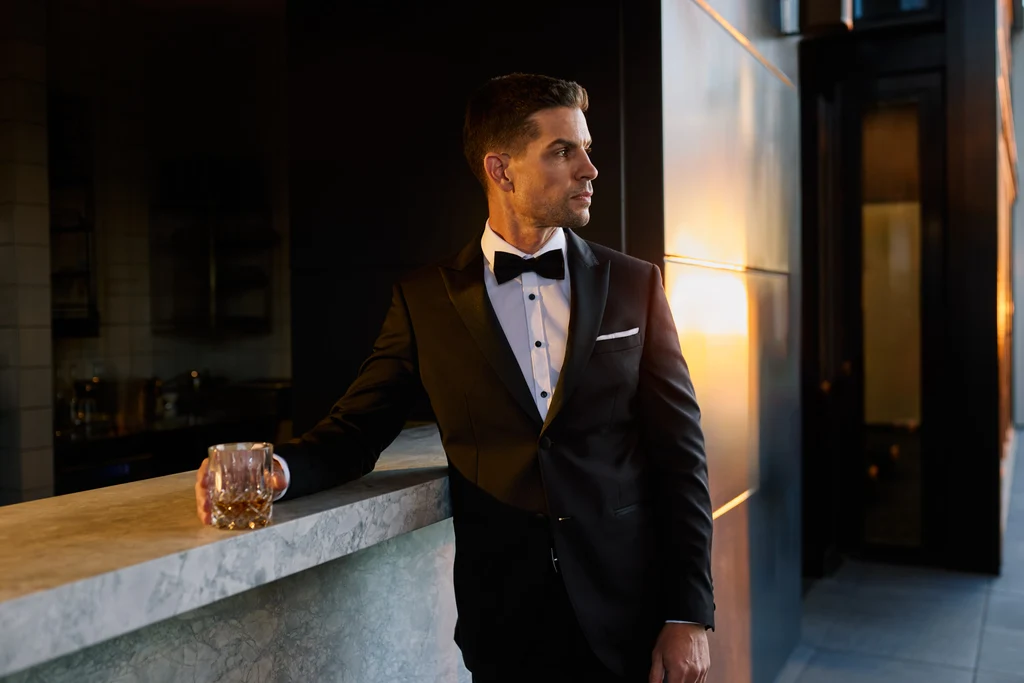
Judge Comfort for Dinner and the Evening Ahead
Explain the setting to the tailor, including whether you expect to spend time outdoors, sit through dinner or dance. Fabric weight, lining and the way the garment is cut all contribute to comfort. Ask to compare suitable options and finished examples instead of assuming that the lightest swatch will always produce the most comfortable outfit.
At the fitting, sit down and move naturally with the intended shirt on. Check the trouser waist and seat as well as the jacket, since much of the evening may be spent seated. Wear the intended shoes, or a close equivalent, so trouser length can be assessed sensibly.
Work Backwards from the Event Date
Give the tailor both the event date and your departure date if you are travelling. Agree fitting appointments, an alteration window and a collection time that allows a final try-on. A quoted production period is useful only if it includes enough opportunity to resolve any issues before you need the clothes.
Keep the agreed fabric, design, included items and payment terms in writing. Before collection, ask about packing, pressing and care, particularly if the outfit will spend time in a suitcase. Try everything together at least once so missing accessories or uncomfortable shoes do not become discoveries on the evening itself.
The finished outfit should satisfy the invitation and let you participate comfortably. Debrett’s guide to formal dress codes provides a useful reference for traditional expectations, while the host can clarify any intended variation. With that brief settled, a coordinated outfit and a realistic fitting schedule make the remaining decisions much simpler.