

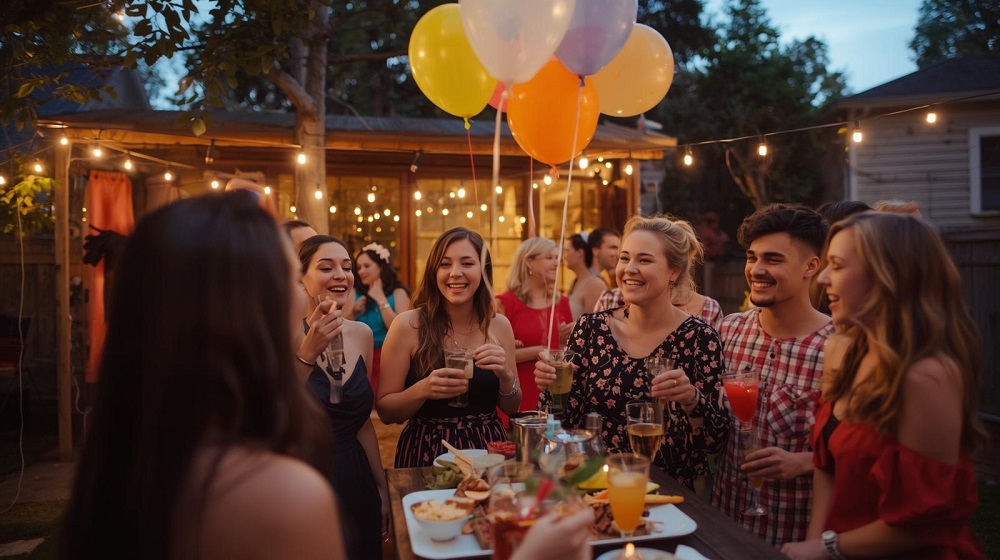
Human beings are inherently social creatures, hardwired to seek connection, community, and celebration. Throughout history, cultural groups have gathered to mark major milestones, seasonal shifts, and personal achievements with communal festivities. While daily routines often fade into a blur of professional obligations and digital administrative tasks, group celebrations stand out as vivid highlights in our personal histories.
The longevity of these memories is not accidental. Shared party experiences, whether a milestone birthday celebration, an elegant wedding reception, a neighborhood block party, or a large-scale festival, are meticulously processed by the human brain. The combination of heightened emotions, multi-sensory environments, and deep social bonding creates an ideal landscape for long-term memory retention. Examining the underlying psychological, neurological, and sociological mechanisms reveals why celebratory gatherings leave an indelible mark on our collective consciousness.
1. Neurological Anchoring Through Multi-Sensory Environments
The physical environment of a vibrant party serves as a powerful catalyst for memory formation. When an individual enters a celebratory space, their sensory organs are immediately flooded with unique, non-standard stimuli that contrast sharply with daily office or home routines.
The human brain relies heavily on sensory cues to catalog and retrieve data. Inside a well-designed social gathering, multiple sensory inputs lock together simultaneously:
-
Auditory Resonance: The specific cadence of up-beat music, the collective rumble of laughter across a crowded room, and the distinctive sound of clinking glassware create a complex acoustic landscape that the brain tags as a unique event.
-
Visual Novelty: Specialized ambient lighting, thematic decorations, formal attire, and dynamic movement provide a rich visual tapestry that breaks the monotony of standard architectural spaces.
-
Olfactory and Gustatory Triggers: The distinct aroma of custom culinary menus, freshly poured celebratory beverages, or seasonal outdoor bonfires bypass traditional cognitive filters, routing directly to the amygdala and hippocampus, where emotional memories are processed.
This multi-sensory saturation creates a robust web of neural connections. Decades later, simply hearing a specific song or smelling a particular culinary spice can instantly trigger a vivid recollection of the entire celebration.
2. Emotional Amplification and Cognitive Focus
Memory retention is directly proportional to the emotional intensity experienced during an event. The brain utilizes a survival mechanism that prioritizes saving information connected to strong emotional states, releasing chemicals like adrenaline and dopamine to lock those memories into long-term storage.
Parties are deliberately engineered to be high-emotion environments. They step outside of ordinary survival logic to focus entirely on joy, surprise, gratitude, and camaraderie.
Furthermore, during these events, individuals naturally achieve a state of heightened psychological presence. Removed from the anxieties of ongoing professional workloads and daily domestic chores, guests achieve a collective cognitive focus. They are fully immersed in the present moment. This deep engagement ensures that the brain encodes the incoming experiential data with incredible clarity, rather than processing it through a distracted filter of multitasking.
3. The Phenomenon of Emotional Contagion and Shared Energy
Attending a celebratory gathering introduces individuals to a powerful psychological mechanism known as emotional contagion. This process involves the automatic, subconscious synchronization of expressions, vocalizations, postures, and movements with those of another person, leading to a convergence of emotional states across a dense group.
When a crowd aggregates on a dance floor or gathers around a dinner table to toast a mutual friend, their emotional outputs begin to feed into one another. The joy of one guest amplifies the happiness of the neighbor, creating a psychological feedback loop that elevates the collective energy of the entire venue.
This shared energy transforms a private internal feeling into a communal reality. Witnessing a room full of people experiencing the identical positive alignment validates your personal emotion, making the experience feel significantly more profound, impactful, and worthy of permanent mental archiving.
4. Building Social Capital and Group Identity Markers
From a sociological perspective, parties function as vital rituals designed to build social capital and reinforce group identity boundaries. Human relationships are built on shared history, and celebratory events serve as the ultimate anchoring points for that history.
When friends, family members, or corporate colleagues navigate an intense, joyful experience together, they establish unique insider reference points, often manifesting as long-lasting inside jokes, shared catchphrases, and collective stories.
-
Strengthening Intimate Bonds: Celebrating a milestone allows distant family members or busy friends to reconnect deeply, transforming superficial updates into substantive shared experiences that reaffirm long-term loyalty.
-
Integrating New Community Members: Introductions that occur within the relaxed, positive framework of a party benefit from an immediate baseline of mutual trust, allowing newcomers to integrate into a social circle far faster than standard formal environments permit.
These gatherings serve as permanent structural markers in a group’s timeline. People frequently categorize their relationships based on these events, remembering exactly who was present during major life transitions, thereby solidifying the collective identity of the circle.
5. Capturing Digital Artifacts as Memory Extensions
In the contemporary era, the process of memory retention has extended beyond purely biological pathways into the digital realm. Parties are premier landscapes for visual documentation and collective content creation.
While critics occasionally argue that photographing events detaches individuals from the present, intentional visual capture serves as a valuable external memory drive. Capturing photos of friends laughing, recording video snippets of spontaneous dance movements, and taking group portraits creates durable physical and digital artifacts.
When these visual records are revisited weeks, months, or years down the road, they act as immediate cognitive keys. A single digital image can instantly reactivate the dormant neural pathways established during the live event, flooding the individual with the original positive emotions and securing the longevity of the memory across a lifetime.
Frequently Asked Questions
Why do inside jokes formed at parties persist for years after the event concludes?
Inside jokes persist because they function as compressed cognitive files representing a complex, highly emotional shared experience. Recalling the joke allows participants to instantly tap into the positive group energy and mutual validation experienced during the original party, serving as a rapid verbal handshake that reinforces ongoing social bonds.
How does the peak-end rule in psychology dictate how we remember a social gathering?
The peak-end rule states that humans judge an past experience based primarily on how it felt at its emotional peak and how it concluded, rather than the average of every single moment. An event planner can secure an amazing long-term memory by designing one extraordinary mid-party highlight and ending the evening with a memorable, high-energy closing sequence.
Can an introverted individual experience the same memory benefits from a large party?
Yes, introverts process these memories deeply, but often through a different behavioral track. While an extrovert might focus on broad crowd interactions, an introvert typically anchors their long-term memories around intimate, high-quality conversations held in quieter areas of the venue, benefiting from the ambient celebratory energy while preserving their social stamina.
What is the connection between physical movement like dancing and memory retention?
Physical movement, especially synchronized group movement like dancing, releases high levels of endorphins and brain-derived neurotrophic factors. This chemical cocktail lowers psychological defenses, amplifies feelings of tribal connection, and stimulates the areas of the brain responsible for encoding spatial and experiential memory data.
Why do surprise elements at a celebration significantly boost the longevity of an event memory?
The brain is wired to predict outcomes based on past experiences. When a party introduces a true surprise, such as an unannounced musical performer or an unexpected guest arrival, it triggers a prediction error in the brain, forcing the cognitive faculties to pay intense, focused attention to the novel stimuli and encoding the memory with extreme vividness.
How do nostalgic music choices alter the collective memory formation at a multi-generational party?
Nostalgic music acts as a powerful emotional time machine. Playing familiar tracks from a shared past activates deeply embedded neural pathways connected to youth and comfort. At a multi-generational event, this shared musical history builds a bridge across generational gaps, allowing older and younger guests to connect over a unified cultural anchor.
Why does hosting an event create a completely different memory profile than simply attending?
Hosts experience an elevated memory profile driven by high cognitive accountability, creative investment, and social navigation. Because a host is intensely focused on logistics, guest comfort, and managing various social dynamics all evening, their brains register a continuous series of high-stakes inputs, resulting in a dense, highly detailed memory map of the entire timeline.